A light aircraft carrying skydivers has crashed in Hawaii, killing at least nine people on board, officials say.
The twin-engine aircraft went down close to Dillingham Airfield near Mokuleia in Honolulu County.
There were no survivors from the crash, the Hawaii Department of Transportation tweeted. Family members may have seen the plane go down.
Photos showed smoke visible from miles away. It is not yet clear whether the plane was taking off or landing.
"Right now, the initial report is that there were nine souls on board," fire chief Manuel Neves told Hawaii News Now. "There's no survivors."
Family members of the skydivers were on the ground when the crash happened and may have seen the aircraft go down, he said.
"It is very difficult. In my 40 years as a firefighter here in Hawaii, this is the most tragic aircraft incident we've had," he added.
The Honolulu Fire Department said it had received reports of a downed plane at about 18:00 local time on Friday.
Of the nine killed, three were customers and six were employees of the company operating the flight.
According to its website, Dillingham Airfield is a joint-use site with the US military having first priority for air-land operations and helicopter night-vision training.
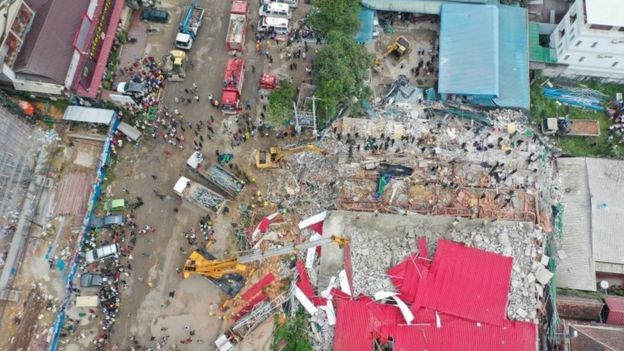
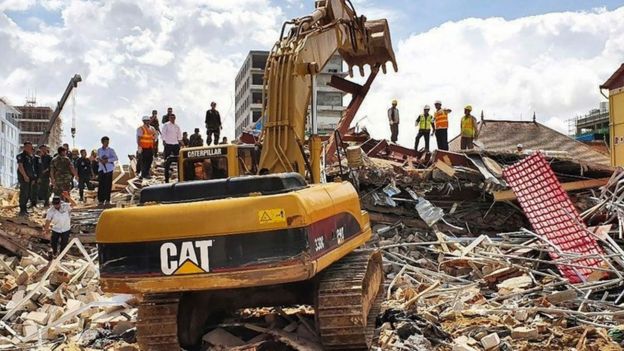
A seven-storey building has collapsed in Cambodia, killing at least 15 people with others reported missing, officials say.
At least 24 people have been injured - several critically - as the search for survivors continues.
The under-construction building in the coastal city of Sihanoukville was owned by a Chinese company.
In recent years, Sihanoukville has been transformed by the construction of Chinese hotels and casinos.
Four people have been arrested over the collapse, including the Chinese building owner, the head of the construction firm and the contractor. A Cambodian landowner has also been taken in for questioning.
Image copyrightREUTERSImage captionAn overhead view of the collapsed under-construction building
Reports vary on the number of people missing as rescue efforts continue.
Three of the victims have been confirmed as Cambodian - two workers and a translator.
About 1,000 people contributed to a rescue effort which involved using saws to cut steel beams in order to move piles of rubble from the site.
"A moment before the building collapsed it was vibrating and then it was falling down," Nhor Chandeun told the news agency. "But it was too quick to escape."
"My wife and I kept calling for help," he said. "We were shouting and shouting but there was no sound replying to us and we presumed that we would die under the rubble."
Both he and his wife were rescued after 12 hours of being trapped.
The provincial governor said about 50 workers would usually be on site at the time the building collapsed.
The building collapse - the worst of its kind in Cambodia in recent years - will raise further questions over the rate and sustainability of construction in Sihanoukville. It is also likely to add to rising anti-Chinese sentiment in the country.
The once-small fishing village saw a boom in tourism in the 2000s, but the last three years has seen the area change beyond recognition with the construction of dozens of casinos catering almost solely to Chinese tourists.
Cambodia has notoriously lax labour laws, putting construction workers at risk.
President Vladimir Putin has temporarily banned Georgian airlines from flying to Russia amid rising tensions between the two countries.
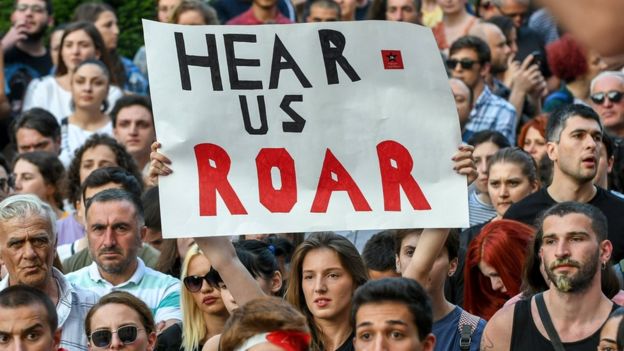
On Thursday, some 240 people were injured in protests in Georgia. The protests were ignited by the appearance of a Russian MP in the country's parliament.
Mr Putin signed a decree on Friday suspending flights to Georgia by Russian airlines.
The suspensions will start from 8 July.
A transport statement on Saturday said the reason for the latest suspension was to "ensure a sufficient level of air security and arrears" owed by Georgian companies.
The Kremlin said the suspension on Russian airlines flying to Georgia was to "ensure Russia's national security and protect Russian nationals from criminal and other unlawful activities."
Tensions between the countries remain high, 11 years after they fought a war over the region of South Ossetia.
On Saturday, a news team from Russian state TV was attacked by two men on the street in the capital, Tbilisi. Nobody appeared to have been seriously hurt in the incident, which was captured on film.
What other action is Putin taking?
Mr Putin has ordered plans to be made to help bring back Russian citizens already in Georgia.
Moscow also recommended that Russian travel agencies suspend all tours to Georgia.
Several thousand Russian tourists are currently in Georgia, Russian tour agency representative Maia Lomidze told Russian media. According to Russian data, about half a million Russians have visited Georgia to date this year while 1.7 million Russian tourists went there last year.
"Tourism in Georgia is on the rise, and the decision has shocked the whole industry," Aleksan Mkrtchyan, who runs a chain of Russian travel agents, said in a statement.
"Georgians have traditionally treated Russians well," Irina Tyurina, a spokeswoman for the Russian Tourism Union, told AFP News agency.
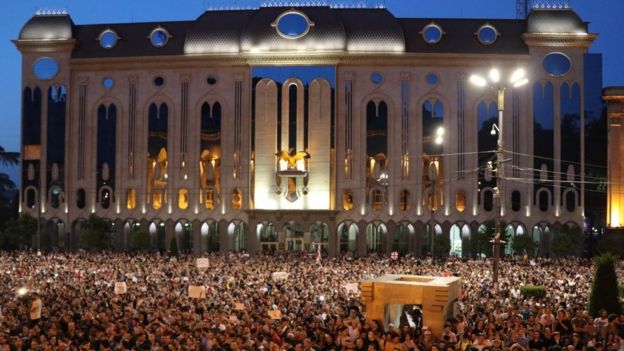
Image copyrightGETTY IMAGESImage captionMass protests have rocked Tbilisi in recent days
Deep frustrations on show
Analysis by Rayhan Demytrie in Tbilisi
Protesters gathered again on Friday night outside the Georgian parliament building where they have been chanting "No to Russia" over and over again.
But they have motives that extend beyond denouncing Moscow. These demonstrators want the Georgian Interior Minister Giorgi Gakharia to resign over his handling of the unrest.
They are also angry at how the police dealt with Thursday's protests. Tear gas, rubber bullets and water cannon were used to push back the crowd in what were ugly scenes.
And on Friday, protesters came out in bigger numbers. It appears the visit of a Russian MP has unlocked much deeper frustrations with the current administration and the way it has handled relations with its northern neighbour.
What caused the protests?
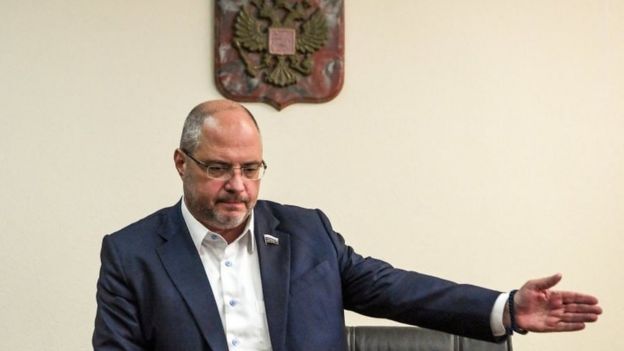
Sergei Gavrilov, the Russian MP who sparked the fury, had addressed an assembly of MPs from Orthodox Christian nations on Thursday.
He had been taking part in the Interparliamentary Assembly on Orthodoxy (IAO) - a body set up by the Greek parliament in 1993 to foster relations between Christian Orthodox lawmakers.
Image copyrightAFP/GETTY IMAGESImage captionSergei Gavrilov described Thursday's protest as a "provocation"
Opposition MPs in Georgia's parliament called for protests after he delivered his speech in Russian from the Speaker's seat.
"That was a slap in the face of recent Georgian history," Elene Khoshtaria, an opposition member of parliament, said.
Thousands of protesters tried to storm the parliament, and police used rubber bullets and tear gas in an attempt to disperse them.
Some protesters carried EU flags and placards reading "Russia is an occupier".
Giga Bokeria, an opposition MP for the European Georgia party, told AFP news agency the rally outside parliament had been "a spontaneous protest by ordinary Georgians".
Image copyrightGETTY IMAGESImage captionDemonstrators remained camped outside the parliament building in Tbilisi late on Friday
The Speaker of the parliament, Irakli Kobakhidze, resigned following the violence.
Georgian President Salome Zurabishvili called Russia "an enemy and occupier", saying Moscow had helped to stir the unrest.
The Kremlin condemned the protests as "Russophobic provocation", while Russia's foreign ministry accused Georgia's opposition of trying to prevent an improvement in bilateral relations.
Why are there tensions between Georgia and Russia?
When Georgia declared independence from the Soviet Union in 1991, separatist conflicts erupted in the regions of Abkhazia and South Ossetia.
In August 2008, Georgia attempted to recapture South Ossetia. Russia poured troops in, ousting Georgian forces and only halting their advance within striking distance of Tbilisi.
Following a ceasefire, Russia withdrew most of its troops from undisputed parts of Georgia but still maintains a military presence in South Ossetia and Abkhazia, recognising both as "independent" states.
Since then, diplomatic relations between Russia and Georgia have remained clouded by mutual suspicion. Georgia has ambitions to join the European Union and Nato, a prospect viewed dimly by Russia.
However, bilateral trade and tourism had been growing in recent years.
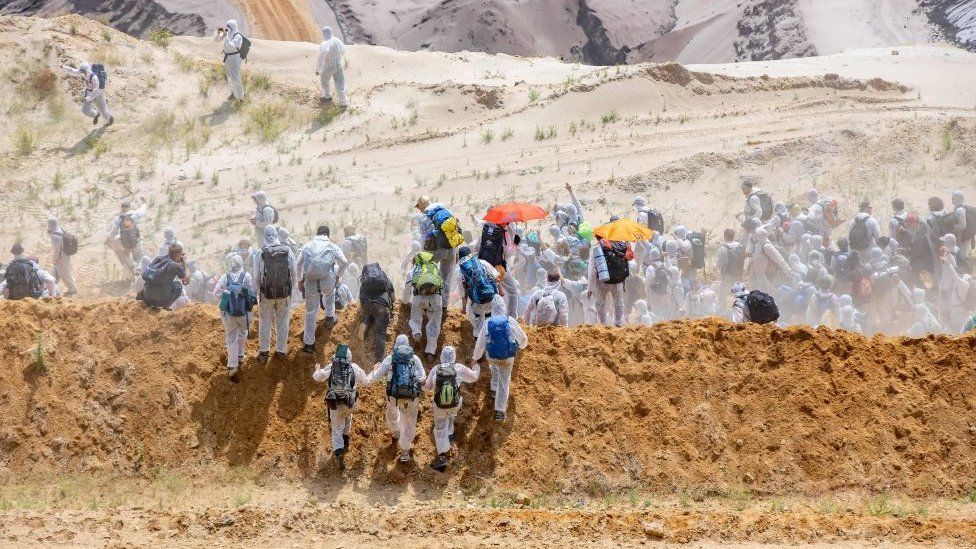
Hundreds of climate change activists have stormed an open cast coal mine in western Germany to campaign against fossil fuels.
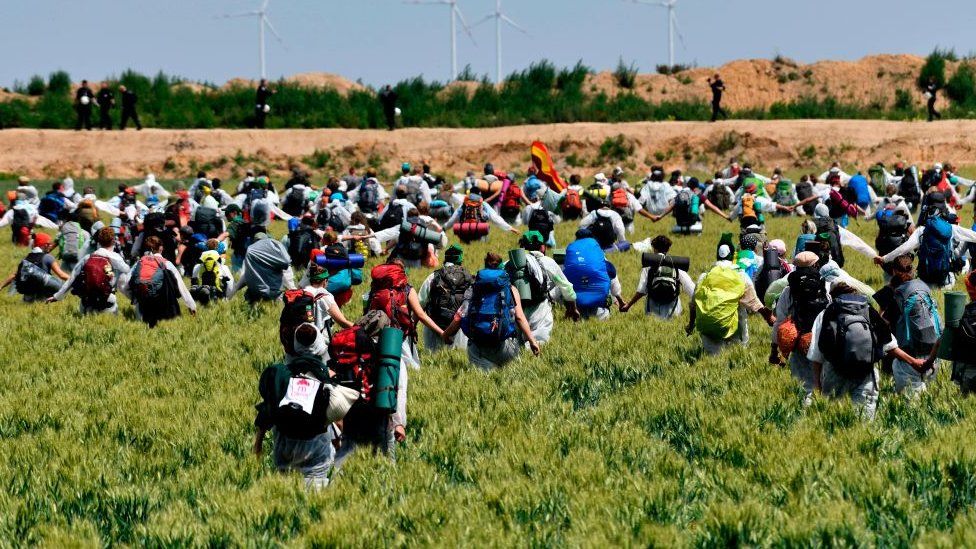
The protesters ran through fields and broke through a police cordon to get into the Garzweiler mine.
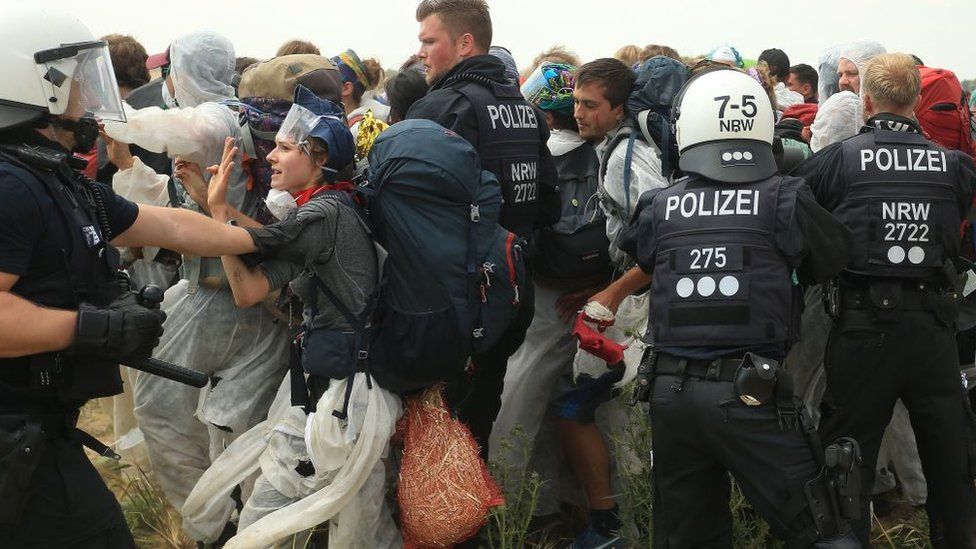
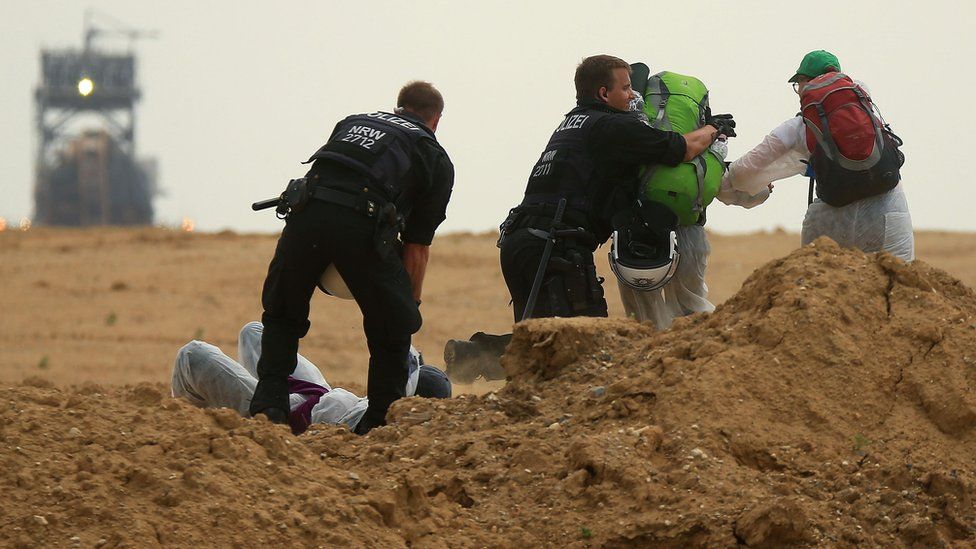
Police had warned that the mine was not safe and said some officers were hurt as they tried to hold back protesters.
Germany has vowed to go carbon neutral by 2050 but activists say this is not soon enough.
Recent surveys have shown that climate change tops a list of concerns in Germany, with the Green party polling alongside the governing Christian Democrats.
Image copyrightGETTY IMAGESImage captionPolice tried to hold back protesters from entering the mine, which they said was dangerous
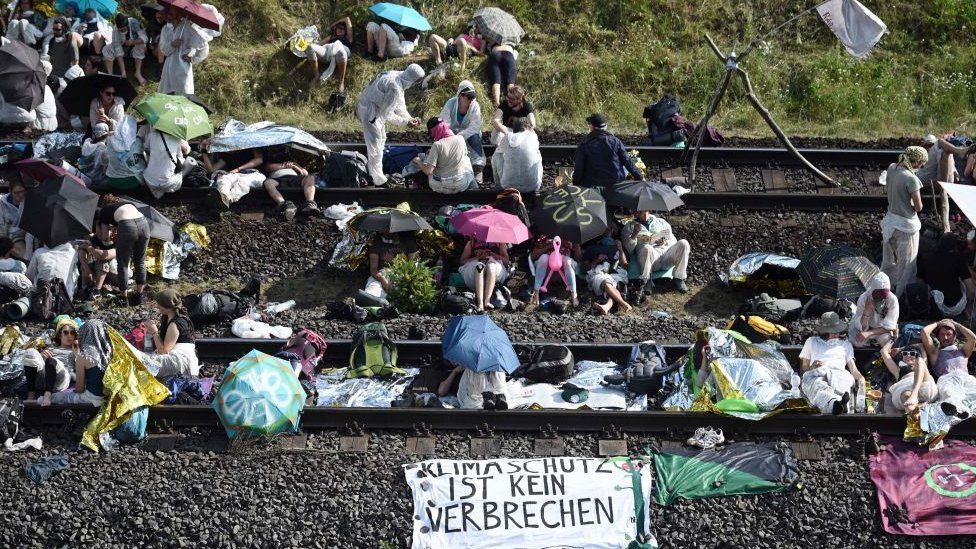
Earlier in the day, protesters temporarily blocked a railway line used to transport coal.
Some of the activists were among between 20,000 and 40,000 protesters who joined a demonstration on Friday in the city of Aachen in support of the school strike movement launched by Swedish teenager Greta Thunberg.
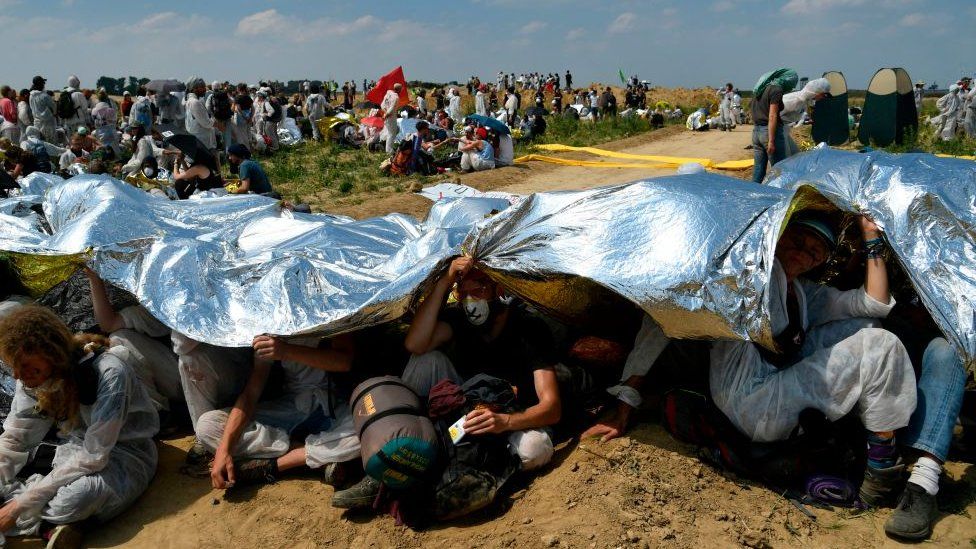
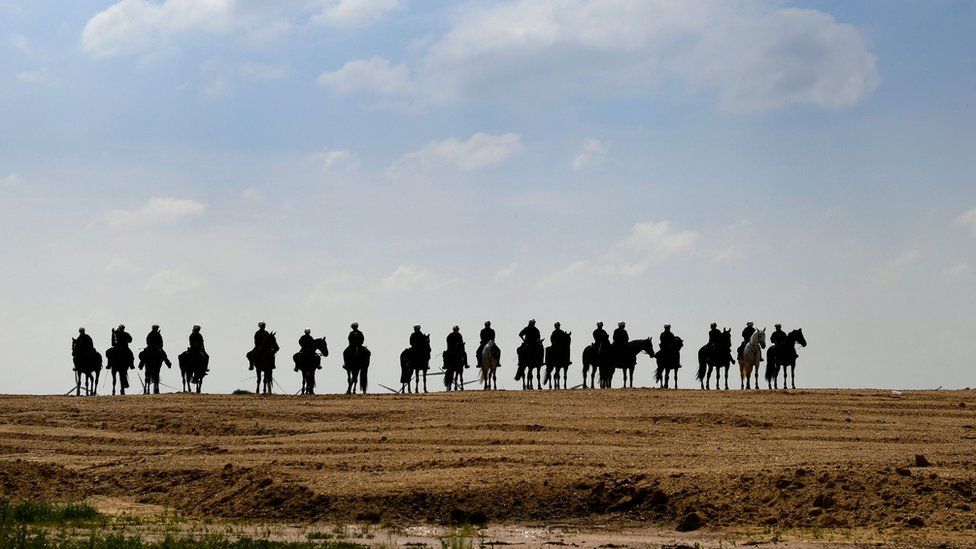
Image copyrightGETTY IMAGESImage captionProtesters carried camping gear, suggesting they intended to spend some time in the mineImage copyrightGETTY IMAGESImage captionPolice said some officers were harmed trying to prevent protesters from entering the mineImage copyrightGETTY IMAGESImage captionDressed in white protective clothing, protesters ran over the sides of the mine to enter the premisesImage copyrightGETTY IMAGESImage captionAfter storming the mine, activists used foil blankets to shield themselves from the sunImage copyrightGETTY IMAGESImage captionClimate activists blocked the rail tracks leading to the Hambach surface mineImage copyrightGETTY IMAGESImage captionPolice on horseback were on duty at the coal mine
As a former mayor of Istanbul - Turkey's economic and cultural centre, home to 15 million people - the president has often said that "he who wins Istanbul wins Turkey".
Who are the candidates?
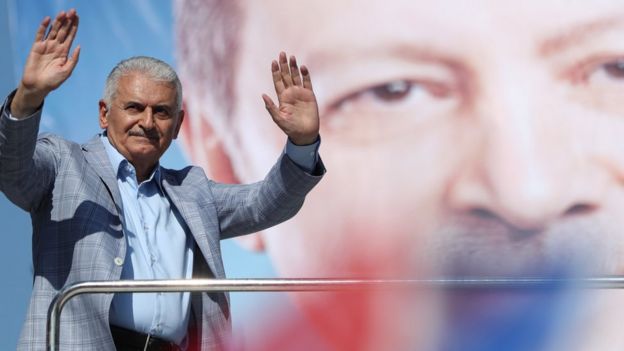
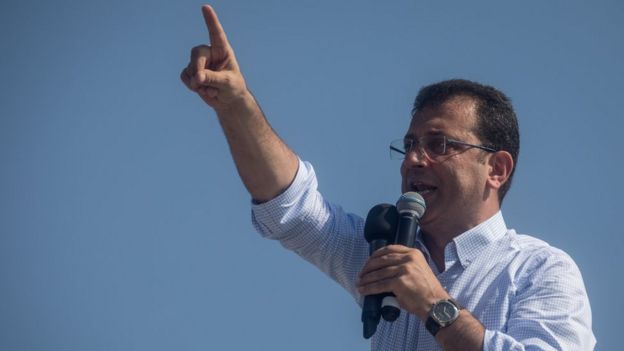
Mr Imamoglu, 49, is from the secular Republican People's Party and is mayor of Istanbul's Beylikduzu district.
His opponent Mr Yildirim was a founding member of Mr Erdogan's AKP and was prime minister between 2016 and 2018, when Turkey became a presidential democracy and the role no longer existed.
He was elected as speaker of the new parliament in February and before that served as minister of transportation and communication.
Image copyrightEPAImage captionBinali Yildirim is an Erdogan loyalist
Mr Imamoglu's name was barely known before he ran for mayor in the March election.
ADVERTISEMENT
His campaign message - "everything will be all right" - has struck a note of optimism in a city where many have become disillusioned following an an economic recession that some blame on the government.
When he was stripped of his victory in the March election, Mr Imamoglu told supporters: "We will win back our rights with a smile on our face."
Image copyrightGETTY IMAGESImage captionMr Imamoglu speaking on the roof of his campaign bus on Saturday
He said he would "embrace those who resist us".
Why was the previous result annulled?
Mr Imamoglu's narrow victory margin of 13,000 votes was not enough for Mr Yildirim to accept defeat.
The ruling party alleged that votes were stolen and many ballot box-watchers did not have official approval, leading the election board to demand a rerun of Istanbul's mayoral election.
Critics argue that pressure from President Erdogan was behind the decision.
Why is this election so important?
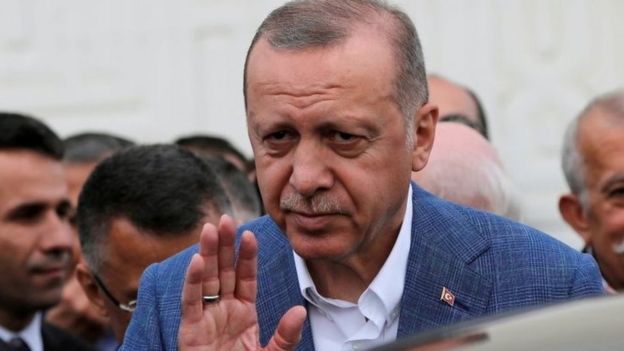
Recep Tayyip Erdogan was himself elected Istanbul mayor - his home city - in 1994.
He founded the AKP in 2001 and served as prime minister between 2003 and 2014, when he became president.
However cracks in the AKP are now beginning to show which could be exacerbated if the party loses this election.
Image copyrightREUTERSImage captionPresident Erdogan is a native of Istanbul and former mayor
"It will be interpreted as the beginning of a decline for AKP and for Erdogan as well," he said. The president himself has called the vote "a matter of survival".
Another Imamoglu win could eventually trigger a national election earlier than the next one scheduled in 2023, a cabinet reshuffle, and possibly a potential adjustment in foreign policy, Yetkin added.